Excessive shedding can follow childbirth, illness, weight loss or stress, while gradual thinning may signal pattern hair loss or an underlying hormonal or scalp condition. By identifying the loss pattern, recording the right history and choosing targeted tests, you can avoid unsuitable products and seek treatment before permanent follicle damage occurs.
Key takeaways
- Shedding 50 to 100 hairs daily is usually normal, but sudden clumps need assessment.
- Match hair loss timing with triggers such as illness, stress, medicines, or hormonal changes.
- Ask about scalp examination, blood tests, medications, and pregnancy plans before treatment.
- Protect fragile regrowth and seek advice early when follicles show signs of permanent loss.
How much hair shedding is normal, and when does it signal a problem?
A normal scalp sheds about 50 to 100 hairs per day, but that figure is a guide, not a daily target. Washing every few days releases hairs that accumulated between washes, while long or dark hairs look more numerous.
Normal hair shedding becomes concerning when density falls, the shedding persists, or the scalp shows a new pattern.
1. Diffuse telogen shedding causes diffuse hair loss across the scalp, often noticed in the shower or on a pillow. It commonly begins two to four months after fever, surgery, childbirth, severe stress, major weight loss, or a medication change, then gradually settles.
2. Progressive pattern hair loss reduces density slowly. A widening central part, thinner crown, or receding hairline points toward pattern loss rather than ordinary shedding; diffuse shedding and pattern loss can occur together.
3. Breakage leaves short, uneven hairs, split ends, or stubble of different lengths, without increased full-length hairs falling from the root. Tight hairstyles, chemical processing, heat, and rough handling can damage the shaft.
4. Smooth, clearly defined bald patches suggest alopecia areata or another focal disorder, especially when eyebrows or eyelashes also thin. Scaling, redness, pain, pustules, or shiny skin raises concern for infection or scarring disease.
Do not rely on counting alone. A clinician compares photographs and history with scalp examination, a hair-pull test, and dermoscopy; a scalp biopsy is reserved for selected uncertain cases. JSImport
Which causes of hair loss match your timing and symptoms?
Hair loss that starts two to three months after a trigger points more strongly to telogen effluvium than to permanent follicle damage. The delay occurs because illness, surgery, childbirth, major stress, rapid weight loss or medication changes first shift many hairs into a resting phase; shedding becomes visible when those hairs release later.
| Pattern | Clues in timing and appearance | Likely explanation |
|---|---|---|
| Telogen effluvium | Sudden, diffuse shedding across the scalp after a trigger; no distinct bald patches | Often temporary shedding; postpartum hair loss is a common form, appearing about 2–4 months after delivery |
| Pattern loss | Gradual widening of the central part, crown thinning, or a receding hairline | Androgenetic alopecia; in women, this is called female-pattern hair loss |
| Patchy or damaged loss | Smooth round patches, broken hairs, scale, redness, pain, or tight-hairstyle thinning | Alopecia areata, scalp infection, traction, or shaft breakage |
Postpartum shedding often improves within 6–12 months, but worsening, patchy or scar-like loss deserves assessment rather than automatic attribution to childbirth. Telogen effluvium can also coexist with pattern loss, so a temporary shed may reveal an already widening part or thinner crown.
Iron deficiency, thyroid disease, PCOS, menopause and medication effects can produce diffuse loss or intensify another pattern. Bring the timing of fever, surgery, dieting, weight change, menstrual changes, new medicines and hair practices to a consultation; the sequence often narrows the cause.
What should a hair-loss consultation examine and test?
A useful hair-loss consultation examines the scalp and matches your symptoms and timeline to targeted testing; it does not begin with a generic hair-loss panel. Bring:
- The date loss began and whether it is sudden, steady or worsening
- Recent fever, surgery, childbirth, major stress, weight change or restrictive dieting
- Menstrual changes, new facial hair, severe acne, fertility concerns or a history of PCOS
- Family history of pattern hair loss
- New medicines, supplements and hair practices such as tight styles, chemical treatments or extensions
Seek prompt assessment for sudden bald patches or rapidly accelerating loss, especially with:
- Pain, marked itching, redness, pustules or heavy scaling
- Broken hairs, tenderness or shiny areas where follicles appear absent
The scalp examination checks density, part width, hair-shaft breakage, follicle openings, scaling and signs of infection or scarring. A hair-pull test estimates active shedding by gently tugging a group of hairs; a positive result supports increased shedding but does not identify its cause.
Dermoscopy, also called trichoscopy, magnifies the scalp and hair shafts to distinguish pattern loss, alopecia areata, inflammation and breakage. A scalp biopsy is reserved for uncertain cases or suspected scarring disease.
Order tests when the history or examination gives a reason. A complete blood count (CBC) and serum ferritin assess anaemia and iron stores; TSH evaluates thyroid disease. Check hormone studies when irregular periods, new facial hair, acne, infertility or rapid progression suggests androgen excess or PCOS. Treat a demonstrated deficiency, not an unproven one.
How does treatment change with the diagnosis, hormones and pregnancy plans?
Treatment follows the cause, not the amount of hair on your brush. Telogen effluvium after illness, childbirth, severe stress or weight loss usually requires removing the trigger and correcting a proven deficiency; iron, vitamin B12, vitamin D or thyroid treatment without a confirmed abnormal result adds risk without fixing the shedding.
| Diagnosis | Usual treatment decision | Important limitation |
|---|---|---|
| Telogen effluvium | Treat the trigger and monitor regrowth | New growth takes months |
| Female-pattern loss | Topical minoxidil; consider prescription treatment | Benefit requires continued use |
| PCOS hair loss | Treat androgen excess and pattern loss | Check periods, acne and unwanted facial hair |
| Menopause-related thinning | Assess pattern loss and discuss hormone-related options | Do not assume every supplement is safe |
Topical minoxidil is the best-established nonprescription option for female-pattern loss. Temporary extra shedding can occur early; stopping usually loses the maintained or regrown hair over the following months. Do not apply it to an inflamed or broken scalp, and wash hands after use to reduce facial-hair transfer.
Ask a clinician before using treatment if you are:
- Pregnant, trying to conceive or breastfeeding: discuss minoxidil first; avoid spironolactone, finasteride and dutasteride unless a specialist gives explicit guidance.
- Considering spironolactone: review menstrual irregularity, breast tenderness, low blood pressure, potassium problems and interactions with ACE inhibitors, ARBs, potassium supplements or other diuretics.
- Using finasteride or dutasteride: arrange contraception and specialist supervision because these drugs can harm male fetal development.
Dr Manisha Patil's Heal & Care - 08048073856 can help coordinate PCOS, menopause and pregnancy-planning decisions before you start a hair-loss prescription.
What can you do while hair regrows, and when is loss permanent?
After a trigger stops, shedding from telogen effluvium often lasts 3–6 months. New hairs then need several more months to restore visible density, so a fuller appearance can take 6–12 months or longer. Postpartum shedding commonly follows this timeline; ongoing worsening or patchy loss needs reassessment.
- Remove tension now. Loosen braids, extensions, weaves and tight buns; pain, crusting or small bumps mean the style is too tight. Early traction alopecia can improve after tension stops, but prolonged pulling can permanently destroy follicles.
- Reduce shaft injury. Limit straighteners, high-heat dryers, bleaching and repeated chemical treatments. Use conditioner, detangle from the ends with a wide-tooth comb, and avoid tight elastics; these measures prevent hair breakage but cannot reverse loss from the follicle.
- Protect regrowth. Avoid crash dieting, handle wet hair gently, and follow treatment for the diagnosed cause rather than adding multiple supplements without a proven deficiency.
Do not wait for cosmetic products if your scalp hurts, burns or itches, develops scale or pustules, or shows shiny smooth skin and missing follicular openings. These signs suggest inflammatory disease or scarring alopecia, which can permanently destroy follicles and needs prompt dermatology assessment.
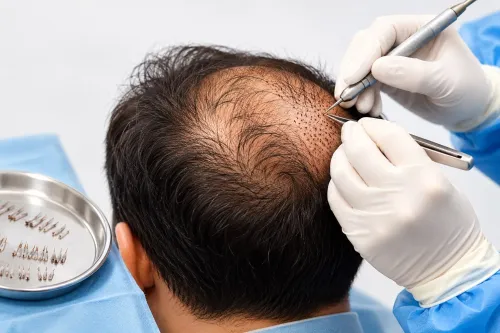
A hair transplant belongs after diagnosis and stable loss, not during active diffuse shedding or untreated inflammation. It requires an adequate donor supply and suits selected, stable permanent loss; transplanting too early can produce poor coverage while the underlying loss continues.
Frequently asked questions
How much hair shedding is normal?
About 50 to 100 hairs per day is a useful guide. Washing after several days can release accumulated hairs at once.
Which causes of hair loss should you consider?
Timing and symptoms help distinguish temporary shedding after illness, stress, or hormonal change from pattern hair loss, scalp disease, medication effects, and nutritional problems.
What happens during a hair-loss consultation?
A consultation should review your timeline, family history, diet, medicines, menstrual or pregnancy history, and scalp appearance. Testing can include blood work when symptoms suggest thyroid, iron, hormonal, or nutritional causes.
How do hormones and pregnancy plans affect treatment?
Treatment depends on the diagnosis, hormone status, and whether you are pregnant, breastfeeding, or planning pregnancy. Tell the clinician before starting prescription hair-loss medicines.
When is hair loss permanent?
Loss is more likely to be permanent when follicles are scarred or progressively miniaturised. Early assessment helps identify treatable causes and protect remaining follicles.