A transplant can improve a receding hairline, widened part or thin crown, but natural results depend on diagnosis, donor planning and the placement of each follicular unit. By the end, you will know whether transplantation fits your type of hair loss, which technique trade-offs matter and how to judge a realistic plan.
Key takeaways
- Confirm the cause of hair loss before using donor follicles.
- A natural result depends on hairline design, graft direction and donor planning.
- Compare FUE and FUT by scarring, graft yield, recovery and surgeon expertise.
- Expect shedding first, visible growth from several months, and a long-term plan.
Is your hair loss suitable for transplantation?
A transplant plan should follow a diagnosis, not replace one. Androgenetic alopecia, including female-pattern hair loss, behaves differently from telogen effluvium, thyroid or iron-related shedding, androgen excess, alopecia areata, medication-related loss, active scalp disease and scarring alopecia. Treating the wrong cause wastes donor follicles and leaves the trigger unresolved.
- Examine the scalp, hair shafts and donor zone for miniaturization, inflammation, broken hairs and scarring.
- Use dermoscopy or trichoscopy to compare follicle diameter, hair density and the pattern of loss.
- Order laboratory tests for suspected thyroid disease, iron deficiency or androgen excess. If the pattern is atypical or scarring is suspected, a scalp biopsy can distinguish inflammatory disease from non-scarring loss.
Hair transplant candidacy depends on donor-area density, your age, the stability of loss, likely future progression and the size of the target area. A stable donor zone with localized frontal, temporal or part-line loss gives a clearer objective than diffuse thinning.
Women with thinning across both donor and recipient areas face less predictable improvement because harvesting can visibly reduce donor coverage. Active scarring alopecia must be controlled and stable before surgery; inflammation can destroy transplanted follicles and increase scarring. The realistic goal is improved framing or coverage, not unlimited restoration of youthful density.
How surgeons make transplanted hair look natural
A natural-looking hairline is soft, irregular and proportionate, not a perfectly straight, low row of dense grafts. Surgeons usually place single-hair follicular units along the leading edge, vary small gaps and angles, then use larger units behind it for coverage. The design must match existing hair in several ways:
- graft direction and angle
- density
- hair caliber
- curl
- follicular-unit size
The surgeon should set priority zones before spending donor hair. Framing the face may take precedence over the crown, and a limited donor supply must be preserved for future progression. Transplantation redistributes follicles; it does not create new ones, so restoring youthful adolescent density across every thinning area is rarely realistic.
Graft counts alone cannot predict the visible result. Thick or curly hair can look fuller with fewer grafts, while fine hair, strong scalp contrast, unfavourable lighting, styling and reduced native hair can make the same count appear thinner. Standardized photographs and examination of the donor area matter more than a promised number.
Beard or body hair is a selected adjunct, not an equivalent replacement for scalp donor hair. Its caliber, curl, growth cycle and final length differ from scalp hair, and its long-term behaviour after transplantation is less predictable. Using it requires a specific coverage problem and a plan that protects remaining scalp follicles.
FUE, FUT and implantation methods: which trade-offs matter?
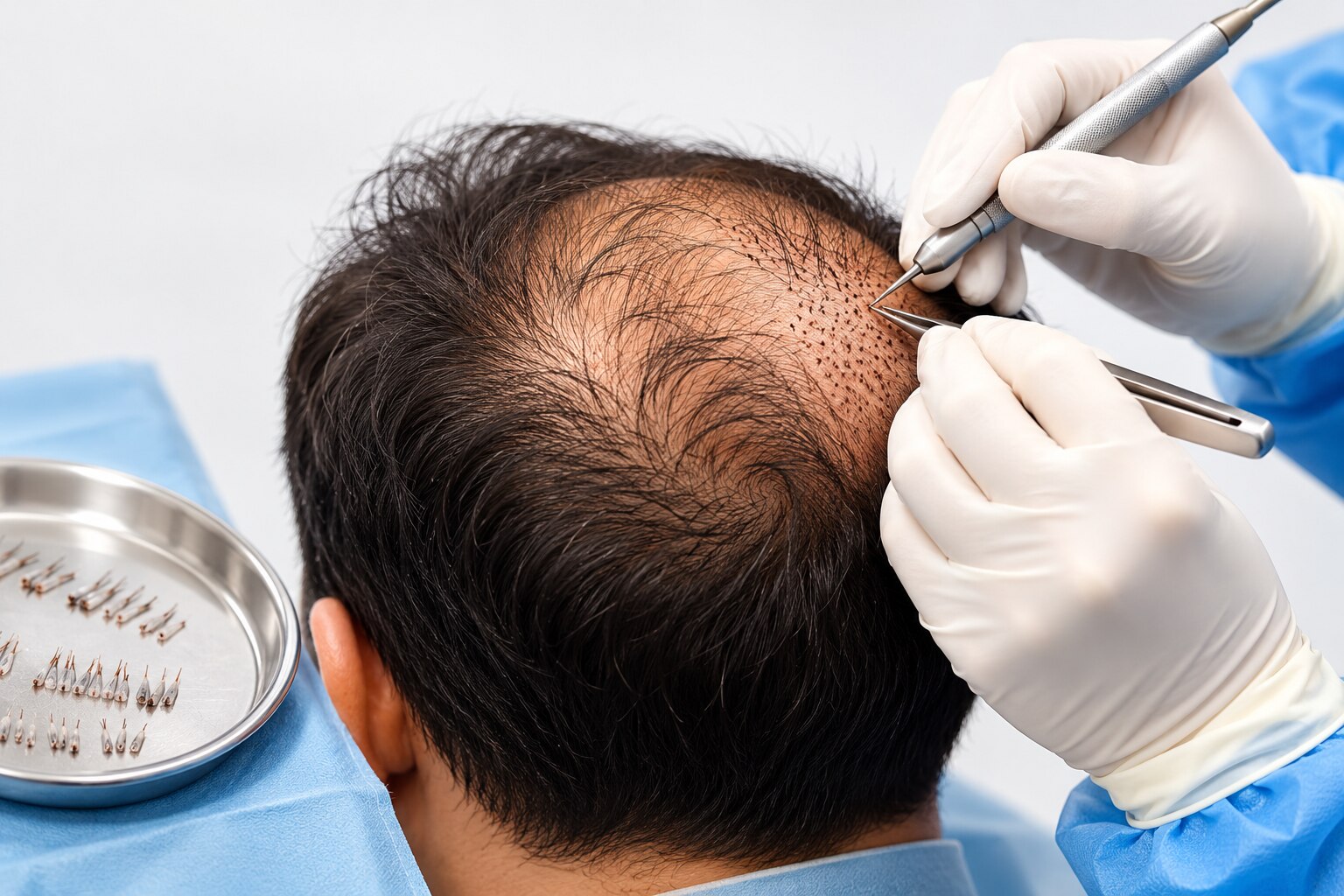
FUE and FUT are extraction choices, not guarantees of a natural result. An FUE hair transplant removes individual follicular units, leaving multiple small, round scars; aggressive harvesting can cause donor overharvesting and visible thinning. A FUT hair transplant removes a strip, leaving a linear scar, but can use a suitable donor zone efficiently.
| Method | Main trade-off | Practical factors |
|---|---|---|
| FUE | Scattered round scars and no strip incision | Often requires short donor hair; extraction can take longer; useful when scalp laxity is limited or a linear scar is unacceptable |
| FUT | One linear scar with efficient strip harvesting | Longer hair can conceal the scar; adequate scalp laxity is necessary; previous surgery or a tendency toward wide scars affects suitability |
| Implanter placement | Placement tool, not a separate source of follicles | An implanter pen can control angle and depth, but poor handling or placement still causes trauma, pitting or cobblestoning |
| Manual or forceps implantation | Direct graft placement after extraction | Handling time, dehydration and crushing can reduce graft survival; swelling, discomfort and crusting depend on the full procedure |
Hair length, scalp laxity, prior surgery and your scarring tendency should drive the choice. FUE can make extensive shaving inconvenient; FUT discomfort centres on the incision and tension, while FUE discomfort usually comes from many extraction sites.
Any approach can produce visible scarring, poor graft growth, unnatural direction or density, pitting and cobblestoning. Choose the method according to the donor area and target, not its marketing label.
What a responsible consultation and treatment plan should include
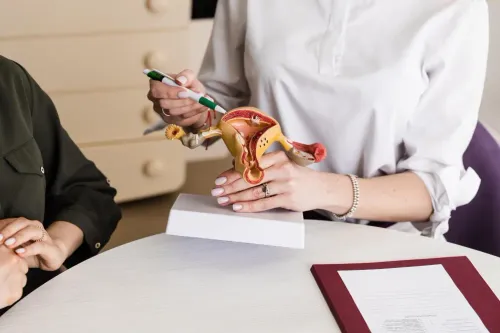
A responsible hair transplant consultation produces a documented plan, not merely a graft number. The clinician must assess whether the donor area can support the priority zone while reserving follicles for future loss.
1. Record the diagnosis and baseline. Examine the scalp and hair shafts, and use trichoscopy or dermoscopy when appropriate. Review medical and family history, current medicines, pregnancy plans, contraception where relevant, and breastfeeding status.
2. Standardize the evidence. Request photographs taken under consistent lighting and angles showing the hairline, part, crown and donor area. One flattering before-and-after image cannot predict your result.
3. Map the treatment. The plan should mark recipient priorities, estimate usable donor density, and explain expected coverage, future progression and the limits of available follicles. Ask how hair caliber, native density and scalp contrast affect the proposed result.
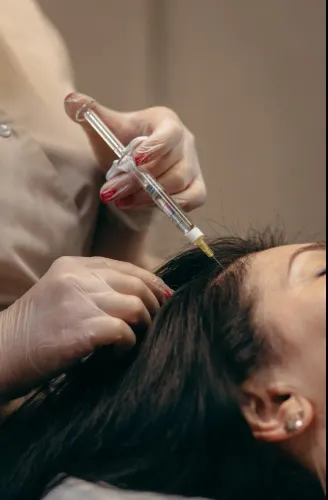
4. Separate preservation from replacement. Ask whether minoxidil, finasteride, dutasteride, platelet-rich plasma (PRP) or mesotherapy are intended to preserve existing hair rather than replace a transplant. The discussion of minoxidil and hair transplant must include topical minoxidil safety during pregnancy and breastfeeding. The finasteride pregnancy warning is clear: finasteride is not appropriate during pregnancy.
In Pune, a consultation at Dr Manisha Patil's Heal & Care - 08048073856 can help you request this documented donor-area and recipient-area plan, especially if a clinic has shown only one photograph or quoted grafts without examining your future risk.
What recovery, growth and possible complications really look like
Hair transplant recovery is measured in months, not days. Follow every prescribed medication instruction, wash gently as directed, sleep with your head elevated when advised, avoid strenuous exercise, protect the scalp from sun and delay tight helmets until the clinician confirms that the grafts are secure.
1. Expect swelling, tenderness and crusting during the early healing period. Do not pick crusts or rub the recipient area; poor aftercare can damage graft survival.
2. Transplanted hairs often shed soon after surgery while the follicles remain in the skin. Early growth usually becomes noticeable after several months, the result is commonly assessed at 9–12 months, and crown maturation can take longer.
3. Shock loss can affect transplanted and nearby native hairs. Miniaturized native hairs that were already close to permanent loss may not return, so prescribed maintenance treatment can help protect the remaining hair.
4. Before consent, ask which hair transplant complications apply to your plan: swelling, pain, crusting, folliculitis, infection, altered sensation, visible scarring, poor graft growth, pitting or cobblestoning, unnatural direction or density, and donor depletion.
A transplant redistributes finite follicles; it does not stop progressive hair loss or create new ones. More than one session may be needed to improve coverage, while treatments such as minoxidil or another clinician-selected therapy may help preserve native hair. Final assessment should compare standardized photographs, density and direction—not an early glimpse in the mirror.
Frequently asked questions
Is every type of hair loss suitable for transplantation?
No. Transplantation is mainly considered after diagnosis confirms a stable, donor-responsive pattern such as androgenetic alopecia. Telogen effluvium, thyroid or iron-related shedding, alopecia areata, active scalp disease and scarring alopecia need cause-specific evaluation first.
How do surgeons make transplanted hair look natural?
They assess donor density, design a conservative hairline, use finer grafts at the front, match graft direction and angle, and distribute follicles to create gradual density rather than a solid plug-like line.
What is the difference between FUE and FUT?
FUE removes individual follicular units and leaves small scattered scars. FUT removes a strip of scalp and leaves a linear scar but can provide efficient graft harvesting. The better choice depends on donor anatomy, hair goals, hairstyle and surgeon expertise.
What should a responsible hair-transplant consultation include?
It should include a diagnosis, scalp and donor-area examination, discussion of medical treatments, realistic density and hairline goals, method-specific risks, graft estimates, recovery instructions and a plan for future hair loss.
What happens after a hair transplant?
Scabs and redness can occur early, and transplanted hairs often shed before regrowing. New growth takes several months, with the final result assessed later. Infection, poor growth, visible scarring, unnatural design and continued native-hair loss are possible complications.