Shaving, waxing, and threading manage visible hair but demand repeated effort, while laser treatment works only when its limits and timing are understood. You will learn how to judge candidacy, prepare safely, estimate the treatment course, and choose between laser, IPL, electrolysis, and simpler hair-removal methods.
Key takeaways
- Expect multiple sessions because hair grows in different cycles.
- Avoid waxing and plucking before treatment; shave instead.
- Report blistering, severe pain, spreading redness, or pigment changes.
- Choose electrolysis for individual hairs or laser-incompatible hair colour.
How laser targets hair and what “long-term” really means
Laser hair reduction uses selective photothermolysis: the device delivers light that melanin in the hair shaft and follicle absorbs more strongly than the surrounding skin. That absorbed energy becomes heat, causing follicle heating that impairs future hair production without deliberately damaging nearby tissue.
The target is strongest during the anagen growth phase, when the hair is actively growing and connected to the follicle’s pigment-rich structures. Other hairs are resting or shedding when you attend, so one session cannot affect every follicle. This is why treatments are spaced apart and repeated as new hairs enter anagen.
“Long-term” does not mean guaranteed lifelong removal of every hair. The FDA definition of permanent hair reduction refers to a stable decrease in actively growing hairs measured at 6, 9, and 12 months after completing a treatment regimen. A reasonable result is lower hair density, slower regrowth, and hair that returns finer or lighter.
Results depend on hair pigment, thickness, skin tone, body area, hormones, and the device settings. Coarse, dark hair usually responds best; low-pigment hair responds poorly because it provides little melanin absorption. Hormonal conditions such as PCOS can drive new growth, making maintenance sessions or medical treatment necessary.
How many sessions you may need—and when laser is the wrong fit
Most people need several treatment sessions rather than one appointment. The number depends on the area treated, hair colour and thickness, skin tone, hormonal influences, and the laser device; coarse, dark hair usually responds better than white, grey, blond, or many red hairs.
Appointments are commonly spaced 4–6 weeks for facial areas and 6–8 weeks for body areas. The interval follows the site and visible regrowth: treating again too soon catches fewer hairs in the active growth phase, while waiting too long delays progress.
Laser is the wrong first step when excess hair could signal a medical problem. Arrange an assessment before cosmetic treatment if you have:
- Sudden or rapidly increasing facial or body hair
- Irregular periods, new acne, or scalp hair loss
- Voice deepening or an unexpected increase in muscle mass
These signs can accompany androgen excess, including polycystic ovary syndrome, and rarely an androgen-producing disorder. Laser treats the follicle, not the hormonal cause, so new growth can continue until the underlying issue is addressed.
Postpone elective treatment during pregnancy because safety data are limited, and disclose pregnancy, possible pregnancy, or breastfeeding during consultation. Very pale or pigment-free hair is also a poor fit because the laser has little melanin to target; ask about electrolysis or another method instead.
What to do before and during an appointment
Shave the treatment area shortly before the appointment, following the clinic’s timing instructions. Do not pluck the root: stop waxing, threading, epilating, and electrolysis for several weeks beforehand, because removing the follicle’s hair target reduces what the laser can heat.
Avoid tanning and disclose pregnancy, possible pregnancy, breastfeeding, medicines, recent sun exposure, scars, tattoos, or active skin irritation.
1. The clinician examines your skin tone, hair colour, thickness, and treatment area. They check for a tan, infection, inflammation, pigmentation disorders, or medicines that increase light sensitivity.
2. You receive an explanation of expected results, risks, settings, and the device being used. Ask whether a patch test is appropriate, especially for darker skin or a recently tanned area.
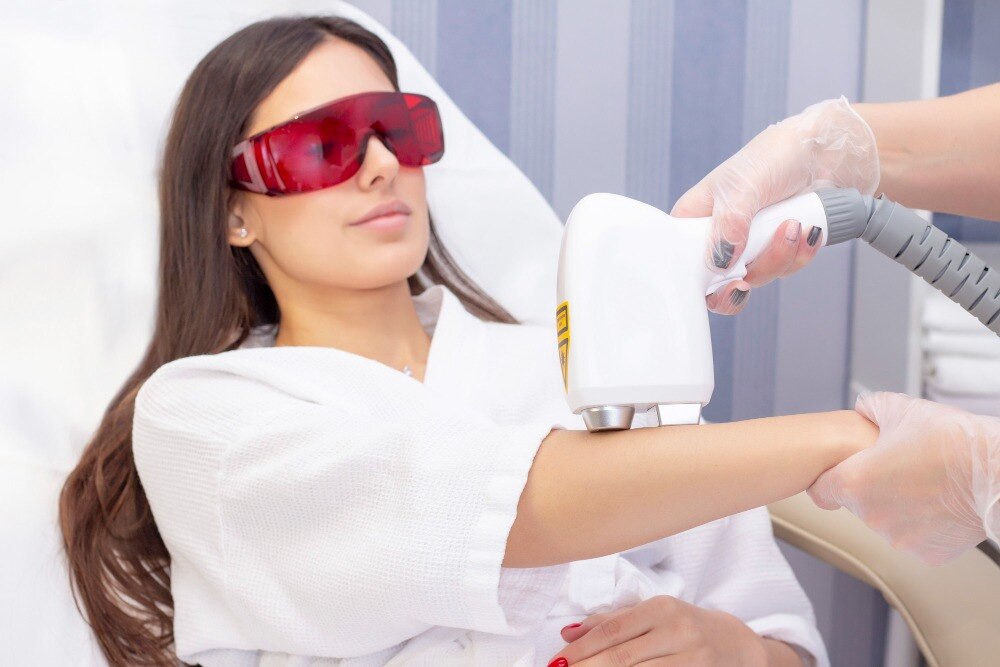
3. You put on wavelength-specific protective eyewear. The clinician confirms that the area is clean and shaved, marks boundaries if needed, and selects energy, pulse duration, and cooling settings.
4. Cooling from a chilled tip, spray, or gel protects the surface while the handpiece delivers short pulses. Each pulse can feel like a warm snap or rubber-band flick; discomfort varies by body site and hair density.
5. The clinician moves across the area in an agreed pattern, checking your skin response and adjusting settings when necessary. The final pulse completes the planned coverage, not necessarily every visible hair; missed or newly growing hairs are addressed at later sessions.
Aftercare, side effects, and signs to report
Protect treated skin from heat and ultraviolet exposure for at least 48 hours. Use broad-spectrum SPF 30 or higher, reapply it every two hours outdoors, and cover the area with clothing; avoid tanning and self-tanner until the skin has settled.
Wash gently, pat dry, and do not scrub, wax, pluck, or pick at the treated area.
Cooling with a clean, cool compress for 5 to 10 minutes can ease warmth and tenderness. Avoid hot baths, saunas, vigorous exercise, and tight clothing for 24 to 48 hours if they increase irritation.
The usual reaction is perifollicular redness with mild follicle swelling. It resembles a light sunburn and should fade within a few hours to two days.
| Expected reaction | What you should do | Seek advice when |
|---|---|---|
| Perifollicular redness or follicle swelling | Use cooling and gentle moisturiser; leave bumps alone | It lasts beyond 48 hours or keeps worsening |
| Mild warmth or tenderness | Avoid heat and friction; use a cool compress | Pain becomes significant or continues to increase |
| Blisters, crusting, or open skin | Do not burst or peel the area | Contact the clinic promptly |
| Darkening or lightening of the skin | Protect it strictly from sun | Report any marked or persistent colour change |
| Spreading redness, pus, or fever | Keep the area clean | Seek prompt clinical assessment |
Eye pain or vision changes after facial treatment requires urgent medical care.
Laser, IPL, electrolysis, and everyday alternatives compared
Choose laser for coarse, dark hair when you want substantial long-term reduction and can budget for a course of clinic sessions. It is not guaranteed permanent hair removal: “permanent hair reduction” means a stable decrease in actively growing hair measured after treatment, with maintenance sometimes needed.
| Option | Best match | Main trade-off |
|---|---|---|
| Laser | Dark hair on light to deep skin, with a device and settings suited to your skin tone | Faster coverage; recent tanning raises burn and pigment-change risk |
| IPL | Dark hair when a lower-cost clinic or home approach is appropriate | Broad-spectrum light is less targeted than laser; home IPL devices use lower energy and need repeated use |
| Electrolysis | White, grey, blond, or red hair, or a small area needing follicle-by-follicle treatment | FDA-recognized method for permanent hair removal; slow and uncomfortable because each follicle is treated individually |
| Shaving or trimming | Any hair colour or skin tone, with the lowest cost and least commitment | No reduction in growth; results last days |
| Waxing or threading | Temporary smoothness without equipment | Pain, ingrown hairs, and regrowth over weeks |
| Depilatory cream | Quick surface removal when your skin tolerates the ingredients | Chemical irritation is possible; patch-test first |
IPL versus laser is not a simple brand comparison: ask which wavelength, fluence, cooling method, and skin-safety protocol will be used. Avoid elective treatment over recently tanned skin.
If facial hair increased with irregular periods, acne, or scalp-hair thinning, ask for hormonal assessment before paying for repeated sessions. Dr Manisha Patil's Heal & Care can help connect unwanted hair with a PCOS evaluation rather than treating the visible symptom alone.
Frequently asked questions
What does “long-term hair reduction” mean?
Laser heats melanin in the hair and follicle to impair future growth. It reduces hair over time rather than guaranteeing permanent removal, and maintenance sessions may be needed.
How many laser hair-reduction sessions might I need?
You need multiple sessions because laser works best on hairs in the active growth phase. The number depends on the treatment area, hair colour and thickness, skin tone, hormonal factors, and response.
When is laser hair reduction the wrong fit?
Laser is less effective when hair has little melanin, including white, grey, blonde, or red hair. Electrolysis can suit individual hairs that laser cannot target.
What should I do before a laser appointment?
Stop waxing, plucking, and epilating so the follicle remains available for treatment. Shave the area as directed, avoid tanning, and tell the clinician about medicines, skin conditions, and recent sun exposure.
What side effects should I report after treatment?
Mild temporary redness, swelling around follicles, warmth, or tenderness can occur. Report blistering, severe pain, spreading redness, infection signs, or persistent light or dark patches.