Visible ageing can involve fine lines, pigment, laxity, enlarged pores, redness, acne scarring or lost facial volume, and these concerns do not respond to the same treatment. By the end, you will know what a proper consultation examines, how common options compare, what preparation and recovery involve, and which questions to ask before choosing a procedure.
Key takeaways
- Ask about your diagnosis, medical history, medicines and treatment risks.
- Match treatment to the concern, such as wrinkles, pigmentation or volume loss.
- Compare downtime, number of sessions and how long results are expected to last.
- Choose a clinic that explains alternatives and obtains informed consent.
What happens during an anti-ageing skin consultation?
Before recommending an anti-ageing treatment, a clinician should identify the actual skin problem, your health context and your goal—not treat “anti-ageing” as a diagnosis. An anti-ageing consultation includes a skin history, medication review, pregnancy and breastfeeding status, previous procedures, allergies, sun exposure and realistic expectations.
1. Examine pigmentation, fine and dynamic wrinkles, skin laxity, acne scars, pores, texture, redness and sun damage. Photographs can document a baseline, but they do not replace examination.
2. Check whether medicines, active dermatitis, rosacea, acne, scarring or poor wound healing could change the choice or recovery time. Discuss sunscreen use and whether you can follow aftercare.
3. For anti-ageing treatment in pregnancy, retinoids should generally be avoided unless the treating clinician advises otherwise. Tell the clinician if you are pregnant, trying to conceive or breastfeeding before using prescription creams or procedures.
4. Discuss menopause symptoms separately. Menopause symptoms and hormone therapy are not one-size-fits-all anti-ageing treatments. Low-dose vaginal oestrogen is for genitourinary symptoms, not general skin rejuvenation.
5. For people aged 45 or over with typical symptoms, repeated hormone panels are not routinely needed to diagnose perimenopause or menopause; NICE guidance supports symptom-based assessment.
Unexplained bleeding, pain, lesions or unusual discharge requires medical assessment rather than cosmetic treatment. Ask what the proposed treatment can change, what it cannot change and why it fits your diagnosis.
Match the treatment to the skin concern
A treatment fits the cause, not the label “anti-ageing.” Fine lines from sun damage need a different plan from forehead lines caused by muscle movement, lost cheek volume, redness or lax skin.
| Concern | Best-fit options | What to know |
|---|---|---|
| Fine lines and uneven pigmentation | Prescription retinoids, vitamin C, chemical peels, microneedling or fractional laser | Retinoids need consistent use over months and can cause dryness, irritation and sun sensitivity. Avoid prescription retinoids during pregnancy unless your clinician advises otherwise. |
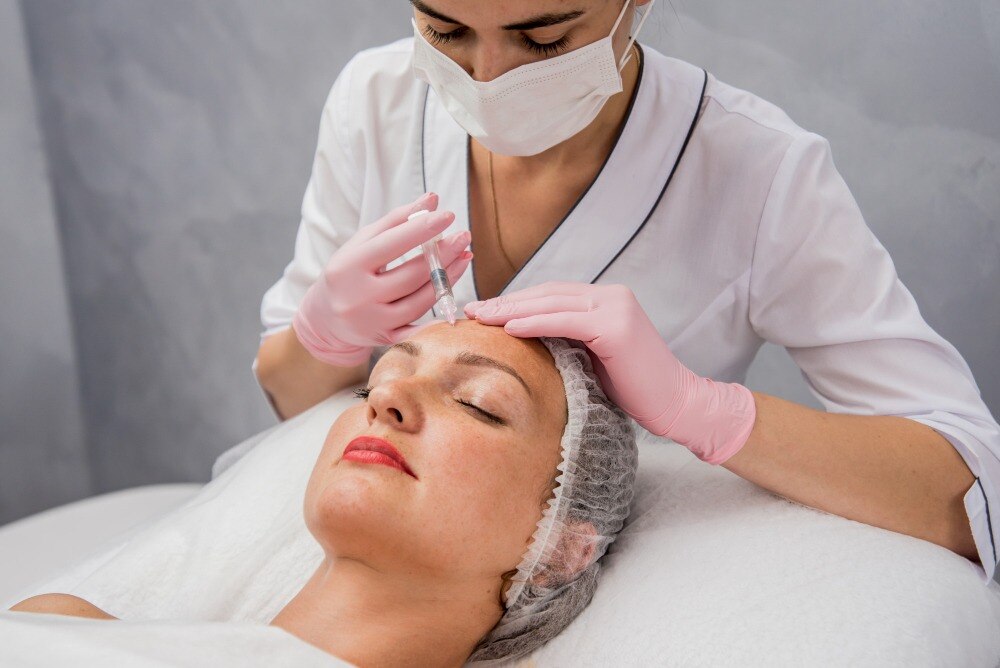
| Dynamic forehead lines | Botulinum toxin | It temporarily relaxes selected muscle movement, usually for about three to four months. It does not replace volume or repair lax, sun-damaged skin. |
| Volume loss and under-eye hollows | Dermal filler | Filler restores contour or volume but does not improve every texture problem. Accidental injection into a blood vessel can block blood flow, causing skin injury or rare vision loss; sudden pain, blanching or visual symptoms need emergency care. |
| Enlarged pores and rough texture | Retinoids, alpha hydroxy acids, microneedling or fractional laser | These target cell turnover and surface texture, not missing facial volume. |
| Redness | Diagnosis first | Rosacea and dermatitis need condition-specific care. Treating unexplained redness with a peel or laser can worsen it. |
| Sagging skin | Skin-tightening procedures | They can produce gradual, modest tightening, not a surgical facelift or a return to youthful skin. |
Laser and microneedling carry risks in darker skin types, including post-inflammatory hyperpigmentation, lighter pigment changes and burns. Ask about skin-type-appropriate settings, a test spot and infection prevention before treatment.
Build prevention before choosing correction
Ultraviolet exposure is the most modifiable driver of visible facial ageing, so prevention deserves attention before correction. Apply broad-spectrum water-resistant SPF 30 or higher every morning, using generous sunscreen application and reapplication at least every two hours outdoors. Add sun-protective clothing and shade. Moisturiser and skin-barrier support reduce scaling and help skin tolerate procedures.
| Active | Main role | Practical point |
|---|---|---|
| Prescription retinoids | Fine lines, texture and pigmentation | Use consistently over months; irritation, dryness and increased sun sensitivity from retinoids are common early problems |
| Vitamin C | Antioxidant support | Apply in the morning under sunscreen |
| Niacinamide | Barrier support and uneven tone | A useful option when stronger actives irritate |
| Alpha hydroxy acids | Surface texture | Overuse can cause stinging and barrier disruption |
Choose one active at a time and wait until your skin is comfortable before adding another. Retinoids and pregnancy require specific caution: avoid prescription retinoids during pregnancy unless your treating clinician advises otherwise. Ask about breastfeeding before starting any prescription product.
Prevention versus correction is a practical distinction: daily protection preserves results, while procedures address changes that sunscreen cannot reverse. Consistent use over months rather than rapid results gives retinoids and pigment-supporting routines a fair trial.
A stable, moisturised barrier also makes recovery from peels, microneedling or laser more predictable; persistent burning, cracking or swelling means stop the active and seek clinical advice.
Compare downtime, sessions and expected results
Judge a treatment only after its biology has had time to work. Daily sunscreen and skincare require ongoing use with no procedure downtime; retinoids bring gradual improvement over months, not days.
| Option | Downtime and sessions | When to judge the result |
|---|---|---|
| Daily sunscreen and skincare | None; ongoing use | Review protection and texture over months |
| Chemical peels | Sessions depend on depth; peeling and redness vary | Assess after healing, once irritation settles. The chemical used, skin type and aftercare determine peeling, redness, infection, scarring and pigment risk |
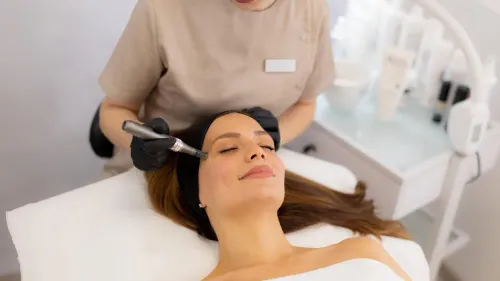
| Microneedling | Planned sessions are spaced according to the device and technique; redness follows treatment | Judge texture after several weeks and the planned course. Risks include infection, bleeding, pigment alteration and herpes reactivation |
| Fractional laser | Downtime depends on settings, wavelength and skin type | Review after healing and collagen remodelling. Burn and pigment risk remain; test spots can reduce, but not eliminate, risk |
| Botulinum toxin | Repeat injections are needed | Cosmetic effects commonly last about three to four months |
| Dermal fillers | One treatment can produce immediate volume, with swelling or bruising during recovery | Judge after swelling settles; this is a medical procedure requiring qualified assessment |
| Skin-tightening procedures | Sessions and downtime vary by device and plan | Improvement depends on the device, laxity and treatment plan, and develops gradually |
Before booking, ask about preparation, exercise restrictions, makeup timing, sun sensitivity, redness, swelling, bruising and peeling. Follow the treating clinician’s device-specific aftercare.
Choose a clinic by safety, diagnosis and informed consent
Before booking, ask for a qualified clinician and examination before treatment. The clinician should diagnose the concern instead of treating every concern as anti-ageing, review medicines, allergies, pregnancy or breastfeeding, and explain treatment goals, alternatives, number of sessions, cost, downtime and limitations.
Check these safety points:
- Choose sterile, medical microneedling rather than home rollers or cosmetic stamping. Avoid combining needling with unapproved drugs, serums or platelet products.
- For laser, ask about a laser test spot, wavelength and settings for your skin type and condition. Incorrect energy can cause burns or lasting pigment changes.
- Confirm that medium and deep peels are not routine salon facials; their depth, chemical and aftercare determine risks such as scarring and infection.
- Treat cosmetic vaginal rejuvenation devices cautiously: reported harms include burns, scarring, painful sex and chronic pain, while safety and effectiveness for these uses are not established.
| Option | Verify before treatment | Stop and seek help when |
|---|---|---|
| Dermal filler | Injector’s medical training, product and emergency plan | Sudden severe pain, skin colour change or visual symptoms require urgent medical assessment |
| Microneedling | Sterile medical device, indication and aftercare | Spreading redness, pus, fever or severe pain develops |
| Laser or peel | Skin-type assessment, test spot or peel depth, and follow-up | Blistering, worsening pigment or persistent pain appears |
Dr Manisha Patil's Heal & Care - 08048073856 in Pune can be considered when you want a consultation connecting skin examination, medical history, goals and follow-up planning before selecting a procedure.
Related services
Gynecology & Women's Health Adolescent & Puberty Clinic in NIBM Road,Pune Compassionate, Confidential & Comprehensive Healthcare for Adolescent Girls Adolescence is an important stage of growth and development when a girl... View service → |
Gynecology & Women's Health PCOD/PCOS Clinic in NIBM Road, Pune Polycystic Ovary Syndrome (PCOS), commonly referred to as PCOD, is a common hormonal condition that can affect women during adolescence and... View service → |
Frequently asked questions
What happens during an anti-ageing skin consultation?
The clinician reviews your skin history, medicines, pregnancy or breastfeeding status, previous procedures, allergies, sun exposure and expectations before recommending treatment.
How do you match treatment to an ageing skin concern?
Identify the concern first, such as fine lines, pigmentation, uneven texture, laxity or volume loss, then compare treatments designed for that problem.
Why build prevention before choosing corrective treatment?
Daily broad-spectrum sunscreen, gentle skincare and habits that limit sun exposure help reduce ongoing damage and support treatment results.
What should you compare before choosing an anti-ageing treatment?
Compare downtime, number of sessions, discomfort, risks, maintenance requirements and the expected timing and duration of results.
How do you choose a safe anti-ageing clinic?
Choose a clinic that diagnoses your concern, discusses alternatives and risks, explains aftercare, and obtains informed consent before treatment.
Related services
Gynecology & Women's Health Best Menopause Clinic in NIBM Road,Pune Comprehensive Menopause Care for Women in Pune Menopause is a natural stage of a woman’s life, but the hormonal changes associated with menopause can... View service → |
Gynecology & Women's Health Best Antenatal Care Clinic in NIBM Road, Pune Comprehensive, Personalized Pregnancy Care for Every Stage of Your Journey Pregnancy is a special phase of life that deserves expert medical... View service → |
Gynecology & Women's Health Cancer Screening & Vaccination in NIBM Road,Pune Early detection can make an important difference in cancer care. Dr. View service → |
Gynecology & Women's Health Best Infertility Treatment Clinic in NIBM Road, Pune If you are looking for infertility treatment in Pune, Dr. Manisha Patil’s Heal & Care Clinic provides personalized gynecology and fertility care for... View service → |