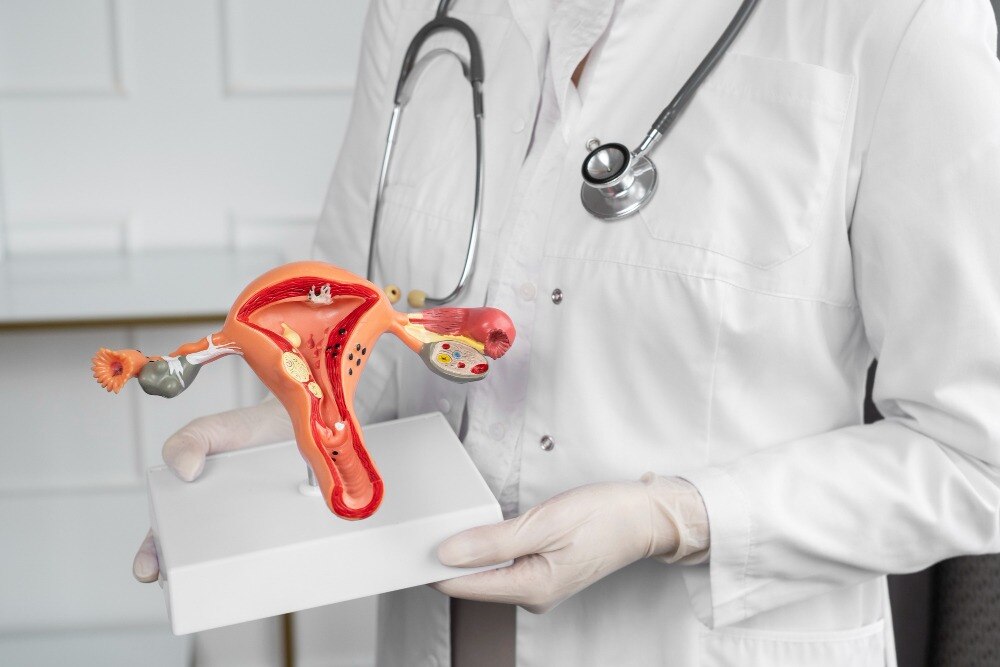
A PCOD consultation should do more than match a symptom to an ultrasound image. You need a diagnosis that rules out similar conditions, checks metabolic and emotional health, and produces a plan that fits your age, pregnancy goals and treatment priorities.
Key takeaways
- PCOS is the recognised diagnosis; PCOD is a loosely used, non-standard term.
- Confirm PCOS after excluding thyroid disease, high prolactin, and other causes.
- Comprehensive care combines cycle management, metabolic screening, fertility planning, and symptom treatment.
- Choose a Pune clinic that coordinates gynaecology, fertility, dermatology, and long-term monitoring.
PCOD and PCOS: Which diagnosis does your doctor use?
Polycystic ovary syndrome, or PCOS, is the recognized medical diagnosis; PCOD is a loosely used, non-standard term. People often use the names interchangeably because both commonly describe irregular periods, acne, unwanted hair growth or fertility concerns, but PCOD versus PCOS is not a comparison of two formally equivalent diagnoses.
| Term | What it means | What it proves |
|---|---|---|
| PCOD | Informal label with no consistent definition in major international guidelines | A reason to assess symptoms, not a confirmed diagnosis |
| PCOS | A clinical syndrome diagnosed using defined findings | Requires assessment of ovulation, androgen levels or signs, and ovarian features |
| Polycystic-appearing ovaries | Many small follicles seen on ultrasound | Does not prove PCOS by itself |
For adults, a clinician can diagnose PCOS when at least two of these three findings are present after other causes have been excluded:
- Ovulatory dysfunction, such as persistently irregular or absent periods
- Clinical or biochemical androgen excess, shown by signs such as excess facial hair or acne, or by raised androgen levels
- Polycystic ovarian morphology on ultrasound or an elevated anti-Müllerian hormone level
Visible ovarian cysts are not required. The follicles associated with PCOS are not the same as dangerous ovarian cysts, and an ultrasound report alone cannot establish the diagnosis. Your doctor combines your cycle history, symptoms, examination and targeted tests before applying the label.
How a PCOS diagnosis is confirmed—and when it is not
A PCOS diagnosis is confirmed through a clinical assessment, not an ultrasound report alone. Your clinician reviews medical history, menstrual-cycle timing and gaps, pregnancy possibility, symptoms of androgen excess, medications, and family history, then performs a physical examination.
Targeted tests can include total testosterone or free testosterone, a DHEAS test, TSH, prolactin, and 17-hydroxyprogesterone when indicated. Pelvic ultrasound helps assess ovarian morphology in adults when the diagnosis remains uncertain.
The assessment also checks for conditions that resemble PCOS:
- Pregnancy, when relevant, through a pregnancy test
- Thyroid disease, using TSH
- Hyperprolactinaemia, using prolactin
- Non-classic congenital adrenal hyperplasia, using 17-hydroxyprogesterone
- Hypothalamic amenorrhoea, based on cycle history, energy balance and clinical findings
- Androgen-secreting tumours, when androgen levels are markedly high or symptoms progress quickly
Rapid virilisation—such as a deepening voice, clitoral enlargement or rapidly increasing muscle mass—or rapidly worsening facial hair requires prompt evaluation rather than routine PCOS treatment.
Adolescents need a stricter pathway because irregular cycles and acne can occur during puberty. Diagnosis requires persistent ovulatory dysfunction plus clinical or biochemical hyperandrogenism after other causes are excluded.
Pelvic ultrasound and AMH are not used for adolescent PCOS diagnosis in the same way as they are for adults, because normal pubertal changes can resemble PCOS.
What comprehensive PCOD care looks like after diagnosis
A PCOS plan must match your priority: menstrual regulation, acne, excess hair, metabolic health, pregnancy, or emotional wellbeing. Long gaps between periods expose the endometrium to prolonged unopposed estrogen. A combined oral contraceptive or periodic progestogen, when appropriate, can protect the uterine lining and regulate bleeding.
Your care plan may include:
- Metformin for insulin resistance, impaired glucose tolerance, or increased diabetes risk—not as a universal PCOS medicine. It does not replace contraception, ovulation induction, or excess-hair treatment.
- For anovulatory infertility, letrozole for PCOS is generally first-line when no other infertility factor is present. Semen analysis and assessment of the fallopian tubes or other fertility factors may still be needed.
- PCOS acne treatment based on standard acne care. Discuss scarring and post-inflammatory hyperpigmentation risk, especially in darker skin.
- Laser hair reduction or electrolysis for unwanted hair. Spironolactone is unsuitable during pregnancy and requires reliable contraception; oral isotretinoin requires strict pregnancy prevention and monitoring.
- Exercise, practical nutrition, and adequate sleep, whether or not weight loss is your goal.
Follow-up should also ask about body-image distress, depression, anxiety, and eating-disorder symptoms rather than judging wellbeing by weight or appearance. Success includes better cycles, metabolic health, skin, fertility, sleep, confidence, and quality of life—not weight loss alone.
Which long-term health risks should a PCOS clinic monitor?
Mild symptoms and a normal-weight body do not remove PCOS metabolic risk. PCOS insulin resistance can occur at any BMI and contribute to prediabetes or type 2 diabetes. Glycaemic assessment belongs at diagnosis, then repeats according to your personal risk.
A 75-g oral glucose tolerance test is the most accurate test for impaired glucose tolerance or diabetes in PCOS, regardless of BMI.
| Risk area | What the clinic reviews | When it matters |
|---|---|---|
| Glycaemic health | Glucose testing, with a 75-g oral glucose tolerance test when appropriate | At diagnosis and at intervals based on risk |
| Cardiovascular risk | Blood pressure, fasting lipids, cholesterol and triglycerides | During routine metabolic review |
| Sleep apnoea | Snoring, witnessed breathing pauses, unrefreshing sleep or daytime sleepiness | Screen when any of these symptoms occur |
| Fatty liver disease | Metabolic risk factors and liver blood tests | Investigate when risk factors or abnormal tests point to fatty liver disease |
A clinic should also screen for depression, anxiety, body-image distress, eating disorders and reduced quality of life rather than judging emotional health from weight or appearance.
Long gaps between periods expose the endometrium to prolonged unopposed estrogen. Cycle protection can reduce this risk, but routine endometrial ultrasound or biopsy is not used in asymptomatic patients solely because they have PCOS.
Scheduled reviews catch changing risks earlier than one-off treatment for acne, irregular periods or excess hair. Your follow-up plan should record what was tested, what needs repeating and which symptoms require earlier review.
How to choose a PCOD clinic for coordinated care in Pune
Choose a PCOD clinic Pune patients can assess by the consultation, not the number of medicines or procedures advertised. A thorough PCOS consultation covers cycle history, pregnancy goals, current medicines, blood pressure, metabolic risk and a plain-language reason for every test ordered.
Ask these questions before booking:
- Who reviews abnormal testosterone, prolactin, TSH, glucose or liver results?
- How soon is follow-up scheduled, and who contacts you about results?
- What happens if the diagnosis remains uncertain?
- Can the team coordinate gynecology, fertility planning, dermatology, cosmetic hair or acne treatment, nutrition guidance and emotional-health referral?
| Feature | Coordinated clinic | Warning sign |
|---|---|---|
| Consultation | Reviews cycles, goals, medicines, blood pressure and metabolic risk | Prescribes before taking a history |
| Testing | Explains each test and interprets abnormal results | Orders a package without reasons |
| Follow-up | Gives a review date and reassesses the plan | Offers one-off treatment only |
| Diagnosis | Excludes alternatives and does not rely on ultrasound alone | Labels PCOS from ultrasound alone |
| Outcomes | Tracks cycles, metabolic health, symptoms and wellbeing | Treats weight as the only result |
A clinic should not promise guaranteed fertility. It should reassess the plan when treatment fails. Dr Manisha Patil's Heal & Care - 08048073856 is a Pune option for a women’s health clinic setting spanning gynecological, reproductive-health and cosmetic dermatology needs; compare its consultation scope and follow-up process against this checklist.
Related service
Gynecology & Women's Health PCOD/PCOS Clinic in NIBM Road, Pune Polycystic Ovary Syndrome (PCOS), commonly referred to as PCOD, is a common hormonal condition that can affect women during adolescence and... View service → |
Frequently asked questions
Are PCOD and PCOS the same diagnosis?
PCOS is the recognised medical diagnosis. PCOD is a loosely used, non-standard term that people often use for similar symptoms.
How is a PCOS diagnosis confirmed?
A doctor reviews symptoms, menstrual history, examination findings, and tests while excluding conditions such as thyroid disease and high prolactin.
What does comprehensive PCOS care include?
Care can address irregular periods, acne, unwanted hair growth, fertility goals, weight and metabolic health, and ongoing follow-up.
Which long-term health risks should a PCOS clinic monitor?
Monitoring can include blood pressure, glucose regulation, lipid levels, menstrual patterns, endometrial protection, and fertility needs.
How do you choose a PCOD clinic in Pune?
Look for coordinated gynaecology care, diagnostic evaluation, fertility support when needed, metabolic monitoring, and treatment for skin or hair symptoms.